Semi Truck Accidents in West Virginia: Who's Actually Liable
Key Points
- Multiple parties can share fault after a truck crash
- Federal trucking rules often decide who pays
- Evidence disappears fast, so act within days
Why Truck Accident Liability Isn't Like Car Accident Liability
If you've been hit by a semi on I-77, I-64, or one of West Virginia's winding mountain routes, you're probably assuming this works like a regular car accident, and it doesn't.
When two passenger cars collide, you're usually looking at one driver's insurance against another, but when an 80,000-pound tractor-trailer is involved, you're looking at a web of companies, contractors, and federal regulations that all connect back to the crash in some way.
The driver is only the starting point. Depending on how the crash happened, any of the following can end up as defendants in the same case:
- The trucking company that employs the driver
- The company that owned the trailer
- The crew that loaded the cargo
- The shipper who arranged the freight
- The maintenance contractor who serviced the brakes
- The manufacturer of a defective part
West Virginia follows a modified comparative fault rule, which means as long as you're 50% or less responsible for the crash you can still recover compensation.
Every additional party you can legitimately bring into the case is another insurance policy your recovery can come from, though it's also another set of defense lawyers working to shift blame back onto you.
The Driver: When Fault Stops With the Person Behind the Wheel
The driver is where every investigation starts because they're the most visible link in the chain. Federal law limits truckers to 11 hours of driving after 10 consecutive hours off duty, and electronic logging devices track that in real time, so when a driver fudges the numbers to make an extra delivery, fatigue-related crashes tend to follow.
Impairment cases are similar in that the evidence is usually clean, since a positive drug or alcohol test after a crash is close to case-closed on driver fault.
The harder cases are the ones built on distraction and ordinary negligence, where cell phone records subpoenaed in discovery routinely show texting or scrolling in the seconds before impact, and where speeding down Sandstone Mountain, tailgating in fog on the Turnpike, or blowing through a stop sign in a coal town all fit the pattern.
Driver error is where most cases start, but it's rarely where they end, because a driver's personal insurance policy is nowhere near enough to cover a serious injury.
The Trucking Company: Vicarious Liability and Direct Negligence
This is where the money is, and it's where the fight gets serious, because trucking companies, called motor carriers in the regulations, are liable in two separate ways.
Vicarious liability means the company is legally responsible for what its driver does on the job, and under federal law this applies even when the driver is technically an independent contractor, which is a common structure carriers use to try to distance themselves.
The Federal Motor Carrier Safety Administration adopted the statutory employee doctrine specifically to close that loophole, so if the driver was hauling under the carrier's DOT number, the carrier is on the hook.
Direct negligence is a separate theory and often more damaging in front of a jury. It shows up in four main forms:
- Negligent hiring: putting a driver behind the wheel with a bad motor vehicle record, prior DUIs, or a history of preventable crashes
- Negligent training: cutting corners on mountain driving, load securement, or hazmat handling
- Negligent retention: keeping a driver on the road after warning signs
- Negligent supervision: pressuring drivers to skip mandatory rest breaks to hit delivery windows
A single crash often involves both vicarious and direct liability, and pleading them together forces the company to defend its whole safety culture rather than just one bad shift.
The Cargo Loader and Shipper
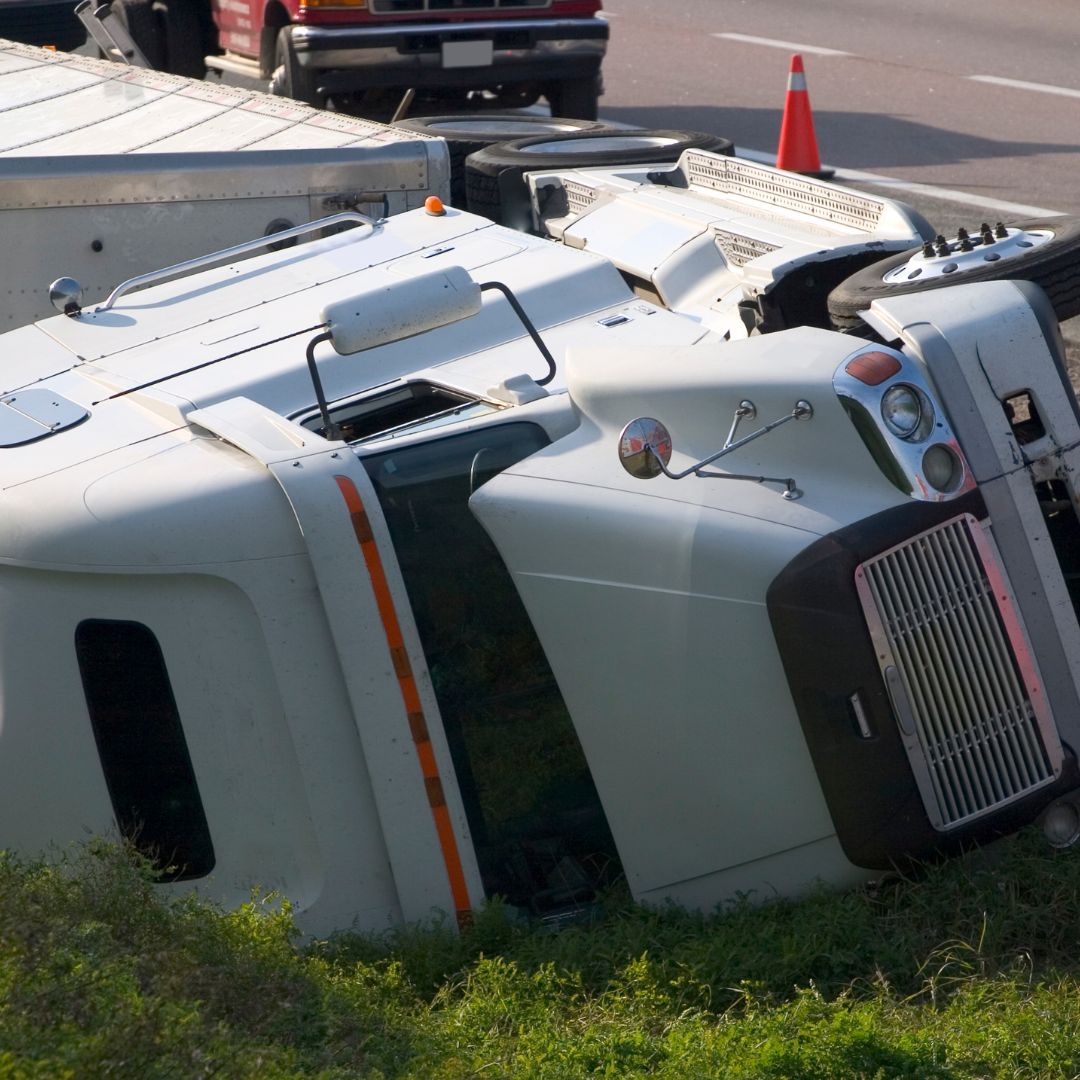
West Virginia's terrain punishes bad loading, because steep grades, tight curves, and long descents on Route 19 and I-77 turn a shifting load into a rollover, and when that happens the company that loaded the trailer can be sued as a separate defendant from the carrier.
Federal cargo securement rules, spelled out in 49 CFR 393, set specific requirements for how loads are tied down, how weight is distributed, and how hazardous materials are labeled, and if a shipper hid the true weight of a load, misrepresented what was inside, or loaded it in a way that violated the regulations, they inherit a share of the liability.
This matters in West Virginia specifically because of the industries operating here, whether that's coal haulers with overweight loads, chemical shippers moving hazmat through the Kanawha Valley, or timber operations with poorly secured logs, and each of those creates a paper trail of bills of lading, weigh station records, and loading manifests that a good attorney can subpoena.
Maintenance Contractors and Parts Manufacturers
Brake failure on a downhill stretch of Route 19 isn't always the driver's fault, and if the last inspection was done by a third-party maintenance shop that missed obvious wear, that shop can be a defendant, and the same goes for tire failures, steering issues, and coupling problems.
Product liability claims go further up the chain, because if a component was defective when it left the factory the manufacturer is liable regardless of who installed it, whether that's a tire that fails below its rated pressure, a brake system with a design defect, a trailer with faulty landing gear, or an underride guard that didn't perform as designed.
These claims require an accident reconstruction expert and often a mechanical engineer, and they also open up defendants with very deep pockets.
What Federal Trucking Regulations Mean for Your Case
The Federal Motor Carrier Safety Regulations, or FMCSRs, are the rulebook for the entire industry. They cover a lot of ground, but the areas that come up most often in accident cases are:
- Hours of service and rest requirements
- Pre-employment and random drug testing
- Driver qualification files
- Pre-trip and post-trip vehicle inspections
- Cargo securement standards
- Weight limits and permit requirements
West Virginia courts treat many FMCSR violations as negligence per se, which means once you prove the violation happened, you don't have to separately prove the trucking company was careless, because the violation itself establishes the breach of duty and the fight moves from whether they were negligent to how much they owe.
This is a massive advantage in litigation, and it's why the first thing an experienced truck accident attorney does is subpoena the carrier's DOT compliance records.
West Virginia's Modified Comparative Fault Rule
West Virginia law bars recovery only when the injured party is more than 50% at fault, so at exactly 50% you can still recover, and below that your award is reduced by your percentage of fault.
As an example, if a jury finds your total damages are $500,000 and assigns you 40% of the fault, your recovery is $300,000. Insurance companies exploit this rule constantly, because their adjusters and defense lawyers work to pin extra fault on the injured driver by arguing you were speeding, distracted, following too closely, or should have seen the truck.
Pushing back requires evidence, which comes from dashcam footage in your vehicle or nearby cars, black box data from the truck, independent witness statements, traffic camera footage, and cell phone records for both drivers, and the percentage assignment is often what a case actually turns on, which is why getting it right is worth six figures.
Evidence That Disappears Within Days
This is where truck cases are won or lost, and it's the reason waiting to call a lawyer is so expensive. Key evidence has a short shelf life:
- Electronic Control Module (ECM) data: speed, braking, throttle position in the seconds before impact, and it can be overwritten within days
- Driver logs and ELD data: retention requirements vary and companies routinely purge on schedule
- Dashcam video: often on a rolling loop that overwrites in a matter of weeks
- Cell phone records: carriers only keep detailed records for a limited time
- Physical evidence at the scene: skid marks, gouges, and debris, gone with the next storm
- The truck itself: repaired and back on the road within weeks
The countermeasure is a spoliation letter, which is a formal legal notice sent to the trucking company demanding they preserve all evidence related to the crash, and when it's sent within the first week it locks the evidence in place and creates serious consequences if the company destroys anything anyway. If you wait a month to hire an attorney, some of this evidence is already gone forever.
Insurance Minimums and Why Truck Cases Are Bigger
Federal law requires interstate motor carriers to carry minimum liability coverage of:
- $750,000 for general freight
- $1 million for oil transport
- $5 million for most hazardous materials
Most carriers voluntarily carry more than the minimums because a single serious crash can wipe out coverage fast, and on top of the primary policy there are usually excess and umbrella policies, broker liability coverage, shipper insurance, and cargo insurance stacked behind them.
When you sue multiple defendants, you tap multiple policies, and this is a large part of why serious semi crash cases settle or verdict at numbers that dwarf typical car accident cases even when the injuries are similar. The coverage exists, and the question is whether your case is built to reach it.
What to Do in the First 72 Hours
The trucking company's rapid response team is already working, because most major carriers send investigators, adjusters, and defense counsel to the scene within hours of a serious crash, and they're photographing evidence, interviewing witnesses, and building a defense before the injured driver is out of the emergency room.
Your job in the first three days is straightforward: get medical treatment and keep every record and receipt, request the crash report from the West Virginia State Police or local law enforcement, photograph your injuries, your vehicle, and the scene if you're able, and then contact a truck accident attorney before that 72-hour mark closes. Just as important is what you should not do:
- Do not give a recorded statement to the trucking company's insurer
- Do not accept any early settlement offer
- Do not post anything about the crash on social media
- Do not sign a medical release without an attorney reviewing it first
The evidence timeline is real, and the carrier's investigators are already ahead of you.
The Statute of Limitations in West Virginia
Personal injury claims arising from a truck crash must be filed within two years of the date of the crash, and wrongful death claims also carry a two-year limit that runs from the date of death, which may be different from the date of the crash if the victim survives for a period afterward.
Two years sounds like a lot, and it isn't, because building a truck case involves a lot of moving parts:
- Subpoenaing carrier records and DOT files
- Retaining accident reconstruction experts
- Retaining medical experts for injury causation and future care
- Multiple rounds of depositions
- Settlement negotiations before any trial date is set
Waiting also shrinks the case itself, because witnesses forget, evidence disappears, and skid marks wash away, and the strongest cases are the ones where an attorney was involved in the first week.
Get a Free Case Review
If you or someone in your family was hit by a semi in West Virginia, don't try to figure out the liability chain on your own. Call us for a free consultation. There's no fee unless we recover for you, and every day that passes is evidence you can't get back.